
09.02.2026 / 08:30
Market Trends: New Drivers for Higher Demand in Risk Management
Energy Markets

Anyone who still thinks that risk management in energy trading is primarily about matching long-term positions against a stable book should think again. The recent energy transition has altered the physics of the market. Speed and volatility are now the new constants. Yet, while trading desks are upgrading their arsenals, risk methodologies often lag behind, with serious consequences.
The Liquidity Trap: When Profitability Does Not Protect Against Insolvency
The energy crisis taught us a brutal lesson: Solvency does not equal liquidity. In the “old world”, market risk was mostly a Profit and Loss (PnL) issue. Today, driven by extreme volatility, market risk impacts cash flow directly.
The mechanism is merciless: If prices explode, clearinghouses and exchanges demand immediate initial and variation margins. Even economically sensible hedges, such as selling electricity forward against one’s own generation, become deadly traps. While the power plant theoretically gains value, the company bleeds out liquidity because hedging profits are only realized upon delivery, whereas margins are due now.
Therefore, risk management must no longer view liquidity in isolation. The solution lies in integration. Market movements must be translated directly into cash effects. Thus, better metrics are needed, such as liquidity at risk, that simulate: “How much cash must be posted tomorrow morning if the market moves 20% in the wrong direction?”. This is analogous to banking ratios like Liquidity Coverage Ratio (LCR) and Net Stable Funding Ratio (NSFR). Anyone calculating stress tests solely on Earnings Before Interest, Taxes, Depreciation, and Amortization (EBITDA) while ignoring the liquidity line is flying blind.
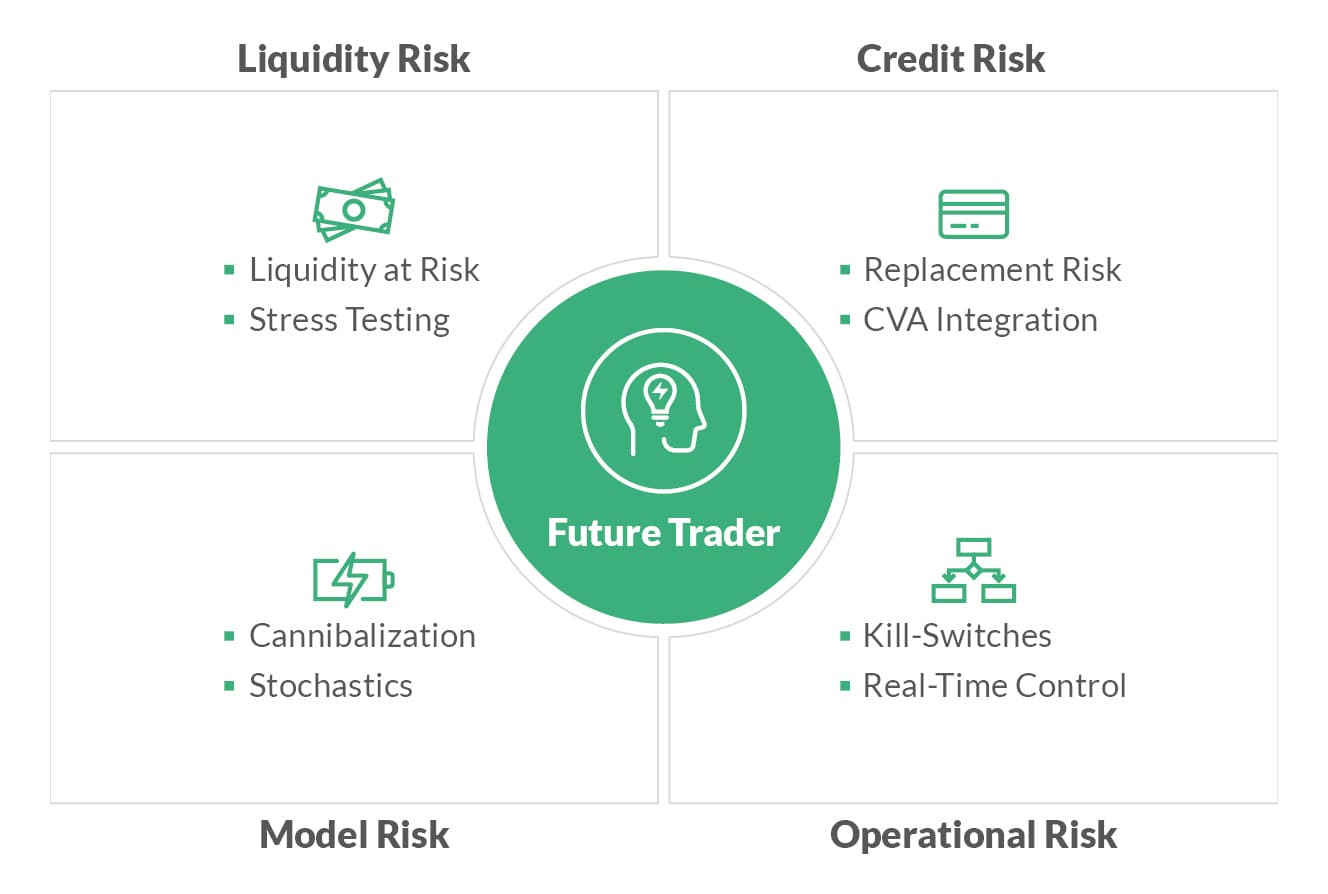
Figure 1: Risk Dimensions of the Future Energy Trader
Rethinking Credit Risk: Why Limits Are Yesterday’s News
The classic credit system, “Partner A has a limit of 10 million euros”, stems from an era of stable prices and is dangerously naive today. In a volatile market, replacement risk fluctuates massively. If a counterparty defaults, the position must be covered anew in the market, usually when prices are extremely unfavorable (wrong-way risk).
Those who only look at the current Mark-to-Market (MtM) value drastically underestimate the risk. More relevant is the Potential Future Exposure (PFE), which highlights where the value of the deal could stand in the future if the partner defaults.
To reflect this risk correctly, there is no way around Credit Valuation Adjustment (CVA), which is a well-known term from banking. CVA is nothing other than pricing the probability of default directly into the deal.
Specifically, this means that a deal with a counterparty with a weak credit rating must have a different price than one with a top-rated player. Introducing CVA often hurts sales, but it is necessary to avoid taking hidden risks onto the books that are not covered by margins in a crisis.
Model Risk: The Illusion of the Average Price
The asset class of renewables and storage forces a radical break with traditional models. A wind farm cannot be valued like a gas power plant because it has a volume risk. If the wind does not blow, the highest price is useless.
Worse still is the cannibalization effect. If all wind turbines produce simultaneously, the price often crashes through the floor. Here, anyone valuing assets with simple average prices (baseload) is fooling themselves. One must model the Capture Rate – a metric showing how much the asset’s specific earnings deviate from the standard baseload price. This requires stochastic models that cleanly map the correlation between “high wind” and “low price”.
It gets even more complex with battery storage. Its value lies not in continuous operation, but in optionality, the ability to flexibly utilize volatility peaks (spreads). Conventional discounted cash flow models fall short here. To determine the value of storage, complex optimization algorithms are needed that simulate thousands of price paths. Ignoring these model risks means making investments based on phantom numbers.
Operational Risk: Speed Kills
With the shift to intraday and algorithmic trading, the nature of operational risk changes fundamentally. Where a trader could correct a typo in seconds, today, the algorithm decides in milliseconds. A wrong parameter (“fat finger”) or a logical error in the code can lead to an order being executed thousands of times before a human has even refreshed the screen. Such “runaway algos” can destroy a year’s profit within minutes.
Therefore, the focus must shift away from manual “four-eyes” principles toward hard IT control mechanisms. Kill switches that immediately stop trading in case of anomalies and automated pre-trade checks are indispensable. Likewise, governance becomes a mandatory exercise, where no algorithm may go to market without rigorous backtesting. One must be able to historically prove how the code would have behaved in stress phases.
In the age of machines, operational risk is no longer a “back-office topic”, but a question of IT architecture and system stability.
The Implementation Headache: Where Theory Meets IT Reality
Designing fancy risk metrics on a whiteboard is one part. The real headache starts when trying to force those ideas into an IT landscape that was not built for speed. In most energy companies, the infrastructure is not a sleek machine but rather a patchwork of legacy ETRM systems and fragile Excel sheets with VBA macros.
One huge obstacle is data fragmentation. To see liquidity risk, three isolated worlds must be stitched together:
1. Open trades in the ETRM
2. Actual cash position in the treasury system
3. Live margin calls coming from brokers
In the real world, these systems rarely talk to each other. They sit in silence until a nightly batch job runs. The result is trying to navigate a volatile morning market using a map drawn last night.
This creates a dangerous intraday blind spot. We are not even talking about the need for high-frequency, millisecond-perfect calculations here. The frustration is far more basic. Most legacy systems are incredibly rigid. They were designed to close the books exactly once, at night.
Conclusion:
Looking at the four outlined pain points, from the liquidity trap to the algorithmic black box, makes one thing clear: The transformation from a classic utility to a technology-driven trader is not an option, but a condition for survival. However, those who view these challenges merely as a defensive compulsory exercise fail to recognize the enormous potential of the new risk world.
Here, the circle closes back to the introduction. In a market characterized by intraday speed and extreme volatility, the winner is not the one with the most assets, but the one with the best control. Excellent risk management transforms from a pure cost factor into a decisive competitive advantage.